
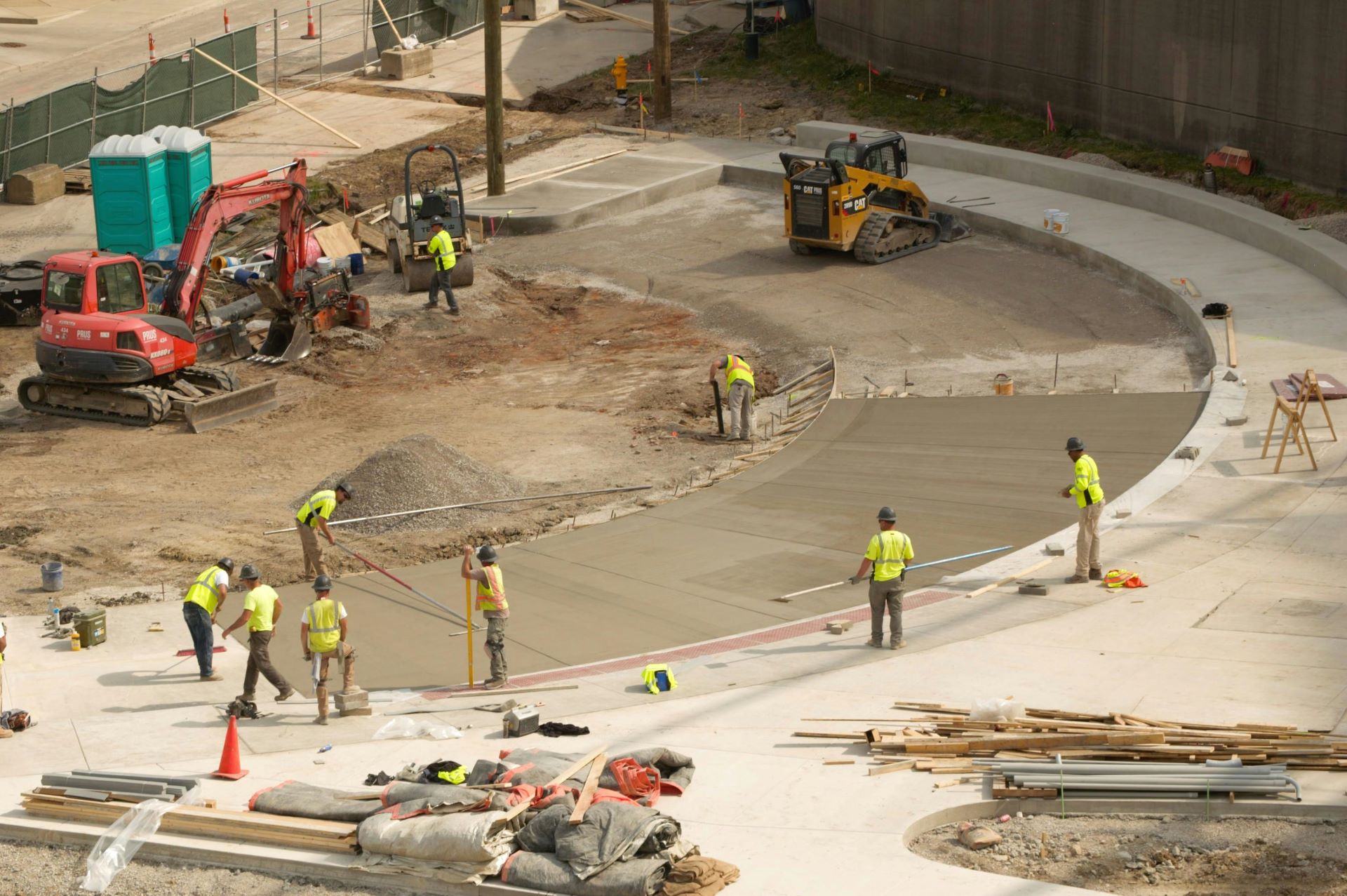
The Satisfaction of a Smooth-Running Construction Project
A well-coordinated construction project carries a quiet but powerful satisfaction, the kind that settles into the worksite like the early morning light across a freshly prepared foundation. It is not the loud satisfaction of celebration, but the deeper assurance that work is progressing as it should, that people are moving with purpose, and that materials, skills, and information are flowing in harmony.
In the dynamic urban environment of Johannesburg, construction and building maintenance projects exist under constant pressure. The city is alive with commercial development, residential expansion, and infrastructure renewal. Within this environment, project success depends less on dramatic moments of problem solving and more on consistent, disciplined execution.
Good construction management is often invisible when it is working well. When coordination is strong, workers do not spend their energy searching for instructions. Trucks do not wait endlessly outside sites. Design revisions are handled early enough to avoid structural confusion. The project breathes steadily, almost quietly, like a well-tuned mechanical heart powering the development process.
Clients may sometimes measure success by the absence of complaints rather than by spectacular achievements. That absence of friction is itself a form of excellence. Smooth delivery protects budgets, protects schedules, and protects professional reputation.
Construction teams that master coordination create environments where technical expertise can shine. Engineers focus on solving design challenges, artisans focus on precision workmanship, and supervisors focus on maintaining productive momentum. The entire site begins to function as a single organised organism rather than a collection of independent activities competing for space and time.
Coordination as the Core of Construction Success
Coordination is the invisible architecture supporting every successful building project.
In large metropolitan areas such as Johannesburg, construction sites face logistical complexity that goes far beyond technical design. Roads are busy with commercial transport, suppliers operate under tight delivery schedules, and labour mobility is influenced by urban commuting patterns.
Project coordination ensures that structural work, mechanical installations, electrical integration, and finishing operations do not clash with one another. When coordination fails, work can suddenly become chaotic. One subcontractor may complete a section only to discover that another team was scheduled to install systems that now require reopening completed surfaces.
The most effective project managers therefore spend substantial time planning interaction points between different teams. Construction is rarely about isolated excellence. Instead, it is about how different forms of excellence intersect without conflict.
A useful mental model is to imagine a construction project as a river system. Individual streams of labour, materials, and information must flow toward a common channel. When streams diverge unpredictably, erosion appears in the form of wasted time, wasted material, and frustrated personnel.
Site supervisors play a critical role in maintaining this flow. Their responsibility is not only technical oversight but also social and operational mediation. They must understand design intent, contractor capacity, and real-time site conditions simultaneously.
In maintenance work across Johannesburg’s commercial buildings, coordination also involves occupants of the building itself. Maintenance work cannot always interrupt business operations. Timing must be negotiated with tenants, property managers, and security personnel. The project therefore becomes as much about relationship management as it is about technical repair.
##Project Management Foundations That Support Smooth Delivery
Construction projects are complex systems operating under uncertainty. Good project management reduces that uncertainty without pretending it can be eliminated.
The foundation of reliable project execution begins with precise scope definition. Every stakeholder should understand the physical extent of the work, the quality standards expected, and the performance outcomes required after completion. Ambiguous instructions are one of the most expensive problems in construction because they allow assumptions to grow quietly until they collide with reality.
Scheduling discipline is the next pillar of stability. Construction tasks must be sequenced logically to avoid destructive interference between activities. Structural preparation must reach sufficient completion before mechanical or electrical installation begins. Surface finishing should follow system testing rather than precede it.
Realistic resource planning is equally important. Optimistic scheduling that assumes perfect supplier behaviour or uninterrupted labour availability is often the origin of future delays. Experienced project managers build protective buffers into their schedules. These buffers are not signs of weakness but of practical wisdom, acknowledging that urban construction operates in a living, unpredictable environment.
Risk management should be treated as an ongoing conversation rather than a document produced once and forgotten. Risks evolve as projects move from excavation to structural assembly to finishing work. Weather conditions, material availability, regulatory approvals, and labour dynamics can all influence progress.
Within Johannesburg’s construction ecosystem, financial risk management is also critical. Payment schedules, procurement commitments, and contractor cash flow must be aligned with physical project milestones. When financial and operational timelines diverge, pressure builds inside the project structure.
The best project managers adopt a mindset of prevention rather than reaction. Instead of preparing only for problems that have already occurred, they anticipate where pressure might appear next and reinforce those areas before failure develops.
Communication That Keeps the Site Breathing
If coordination is the skeleton of construction management, communication is the breathing rhythm that keeps the system alive.
Construction projects often fail quietly through information gaps rather than dramatic technical mistakes. A design change that was discussed verbally but not formally recorded can lead to misaligned installation work. A scheduling adjustment communicated only to one subcontractor can create conflict between teams working in adjacent spaces.
Clear communication requires simplicity. Technical language is necessary in engineering work, but operational instructions must remain actionable and unambiguous. Workers on site should understand exactly what is expected of them without needing to interpret complex explanations.
Formal documentation is essential. Design drawings, revision notes, safety instructions, and scheduling updates must be stored in accessible and verified systems rather than scattered across informal conversations.
Regular coordination meetings support information integrity. Many successful projects hold structured sessions where supervisors report progress, highlight obstacles, and confirm next-phase readiness.
In busy construction zones within Johannesburg, visual communication also plays an important role. Signage that indicates safety zones, restricted movement areas, and equipment operation rules reduces the risk of accidents caused by misunderstanding or distraction.
Leadership communication style matters just as much as communication tools. When project leaders encourage questions and acknowledge concerns, site workers become more willing to report emerging problems early. Early warning information is one of the most valuable resources in construction management.
Scheduling Excellence and Workflow Harmony
Construction scheduling is often compared to orchestrating movement through a complicated intersection where multiple streams of activity must cross without collision.
Modern project management emphasises workflow continuity rather than isolated task completion. The objective is not simply finishing individual activities but ensuring that one activity prepares the ground for the next.
For example, finishing teams should ideally receive work areas that are structurally sound, inspected, and free from hazards before they begin their processes. If finishing work starts prematurely, quality defects may emerge later and require expensive correction.
Idle time is one of the most silent threats to construction efficiency. When workers wait for materials, approvals, or instructions, productivity evaporates without leaving visible traces. Unlike mechanical failure, idle time often hides inside administrative or logistical delays.
Successful scheduling practice therefore requires constant monitoring of project momentum. Progress should be evaluated not only by completed tasks but also by the smoothness of transitions between tasks.
Urban construction projects in Johannesburg must also respect external time pressures. Traffic congestion affects material delivery schedules. Municipal regulations may influence working hours in certain zones. Residential areas may require noise management considerations.
Buffer planning becomes particularly important in such environments. A buffer is not wasted time; it is controlled flexibility that protects the project from inevitable uncertainties.
Quality Control: Building Maintenance and Construction Integrity
Quality assurance is where coordination transforms into lasting value.
Poor-quality construction may appear cheaper in the short term but becomes financially destructive over the lifecycle of the building. Repairing structural defects after completion is significantly more expensive than preventing them during installation.
Quality control begins with material verification. Every batch of construction material should meet specification requirements before it is used. Substandard materials may behave unpredictably under load or environmental stress.
Workmanship supervision is equally important. Skilled labour does not automatically guarantee consistent output without proper oversight. Supervisors must inspect critical stages of construction such as reinforcement placement, electrical routing, and waterproofing preparation.
Inspection checkpoints should be embedded throughout the project rather than concentrated only at the final stage. Waiting until completion to verify quality is similar to checking the stability of a bridge after it has already been opened to traffic.
Building maintenance projects in Johannesburg face additional quality challenges because they often operate within existing structural systems. Maintenance teams must diagnose problems carefully before applying corrective work. Treating symptoms without understanding causes can lead to repeated failure cycles.
Safety as the First Operational Language
Safety is not a department inside construction projects. Safety is the first language spoken by the site itself.
Construction work involves physical risk because it manipulates heavy materials, elevated structures, and electrical systems. In urban construction environments, safety management also protects pedestrians, nearby businesses, and building occupants.
Safety planning begins before physical work starts. Site access points should be controlled. Hazard zones should be clearly marked. Equipment operation must follow verified competency standards.
Training is a central component of safety culture. Workers must understand not only how to perform tasks but also why certain safety procedures exist. When workers internalise safety principles, compliance becomes natural rather than forced.
Supervisors should conduct regular safety observations rather than relying solely on formal inspections. Many dangerous behaviours develop gradually through habit rather than sudden negligence.
Johannesburg construction projects must also consider environmental safety factors such as wind conditions in high-rise work, traffic interaction around construction zones, and security risks associated with urban equipment storage.
Supplier and Logistics Reliability in Johannesburg
Material supply chains are the circulatory system of construction projects.
Urban construction in Johannesburg depends heavily on supplier reliability because storage space on active sites is often limited. Materials must arrive close to the time they are required.
Strong supplier relationships reduce uncertainty. Long-term partnerships encourage better service consistency, more accurate delivery forecasts, and faster problem resolution when unexpected disruptions occur.
Procurement teams should maintain multiple supplier options for critical materials. Dependence on a single source increases vulnerability to price fluctuations or transport disruptions.
Delivery scheduling must account for urban traffic patterns, particularly during peak commuting hours. Construction vehicles entering commercial districts during congestion periods may experience significant delays.
Site storage management is also important. Materials should be organised systematically to prevent damage, theft, or unnecessary handling.
Technology and Modern Construction Management
Technology is quietly reshaping construction project coordination.
Digital project management platforms allow supervisors and contractors to monitor progress in real time. Design modifications can be communicated faster than traditional paper-based methods.
Building information modelling systems help teams visualise structural interactions before physical construction begins. Early detection of design conflicts saves both time and material resources.
Mobile communication tools allow field workers to report progress instantly. Site managers can review photographs, measurements, and status updates without waiting for physical reporting cycles.
However, technology should support human judgement rather than replace it. Experienced construction professionals still play the central role in interpreting data and making operational decisions.
The Role of Skilled Labour and Training
Human skill remains the most valuable asset in construction.
Machinery can move materials, but skilled workers shape quality. Continuous training programs help workers adapt to new construction methods, safety requirements, and technological systems.
Mentorship within construction teams is particularly powerful. Experienced artisans transfer practical knowledge that is often not written in manuals but exists in real working memory.
In Johannesburg’s construction sector, workforce development also supports broader social and economic stability by creating employment pathways and technical career opportunities.
Maintenance Projects: A Different Kind of Construction Rhythm
Building maintenance projects operate at a different tempo from new construction.
Maintenance work must balance repair activity with operational continuity. Commercial properties cannot always suspend business operations for structural repairs.
Maintenance teams must therefore work with precision and minimal disruption. Diagnostic accuracy is essential because maintenance interventions should target root causes rather than surface symptoms.
Regular preventive maintenance reduces long-term cost pressure. Small repairs performed early prevent major structural deterioration later.
Client Relationships and Trust Building
Trust is the long-term currency of construction success.
Clients remember reliability more than isolated moments of brilliance. A project completed slightly slower but delivered with consistent communication and quality is often valued more than a project completed quickly but with operational stress.
Transparent reporting builds confidence. Clients should understand project progress, potential risks, and mitigation strategies.
Professional construction management treats client engagement as an ongoing relationship rather than a contractual obligation alone.
Long-Term Value Beyond Project Completion
The true satisfaction of a smooth-running construction project emerges after completion.
A well-executed building continues serving its purpose quietly, supporting commerce, sheltering families, or enabling business activity without constant repair demands.
In a city like Johannesburg, where economic development and urban transformation continue to accelerate, construction excellence contributes to the broader rhythm of urban life.
Smooth project delivery is therefore not only about operational efficiency. It is about creating infrastructure that carries stability into the future, one carefully coordinated layer at a time.
The satisfaction of construction success is felt when workers leave the site knowing their work will endure, when clients step into a space that performs as promised, and when the city itself moves forward with quieter confidence beneath its growing skyline.
In the end, good coordination is not merely a management technique. It is a philosophy of respect for time, skill, and collective human effort inside the demanding, beautiful complexity of building the world.