
Smarter maintenance records: how commercial properties can turn recurring faults into better decisions
Smarter maintenance records: how commercial properties can turn recurring faults into better decisions
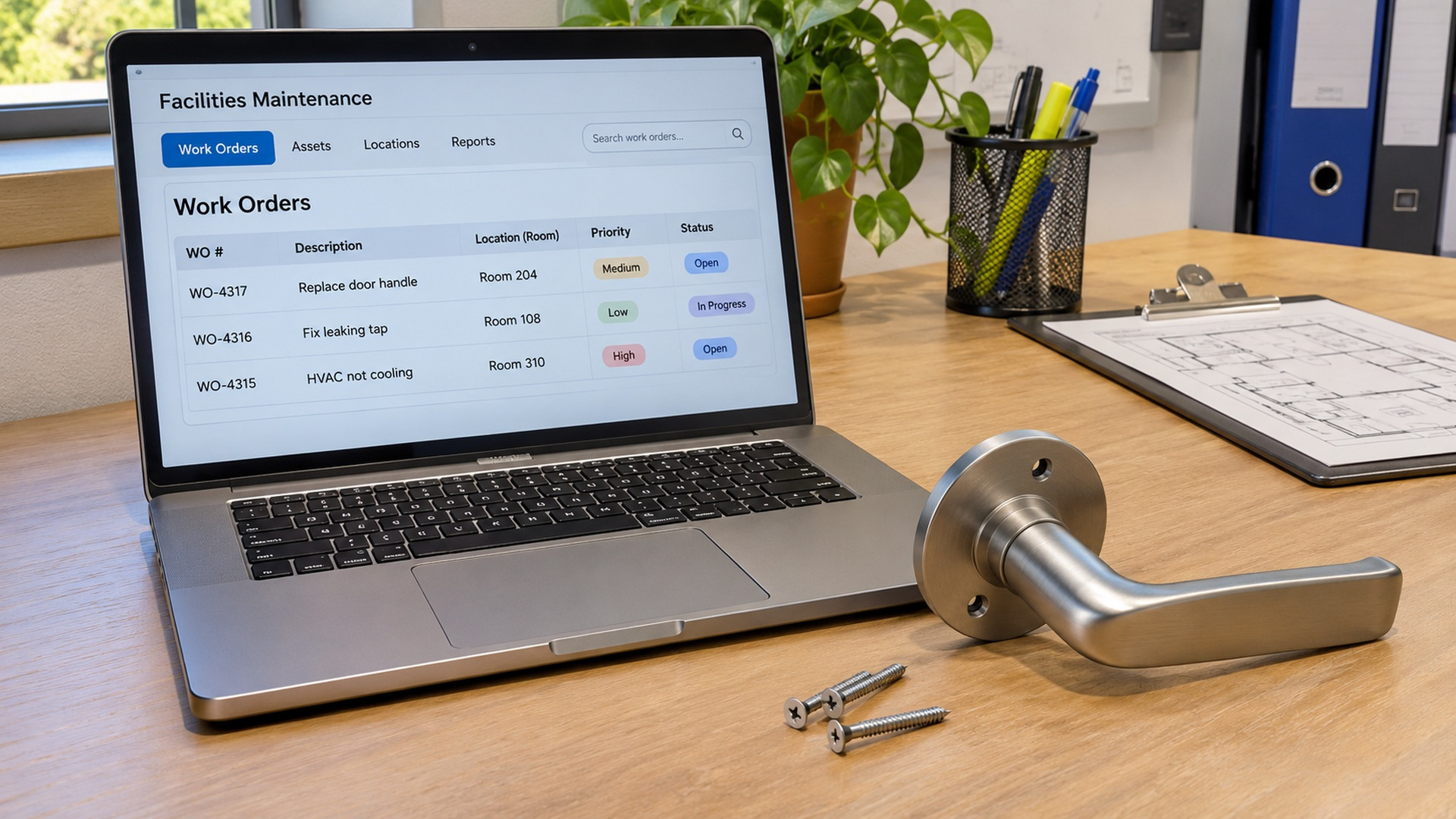
A maintenance request often begins as a message: a door is sticking, a light is not working or a meeting room is unavailable. Someone calls a contractor, the immediate problem is addressed and the organisation moves on. When the same issue returns months later, the people involved may no longer remember what was done or which component was replaced.
Digital maintenance systems can help, but the important development is not the software itself. It is the ability to connect a reported issue to a location, an assessment, an approved action and a useful history. Even a small building can benefit from that discipline using a shared spreadsheet. A larger portfolio may need a dedicated platform with permissions, asset records and reporting.
For owners and facilities managers, the question is practical: what information will help the team make a better maintenance decision next time? A system that collects more data than anyone can maintain may be less useful than a simple record that people actually use.
Start with a repeatable record
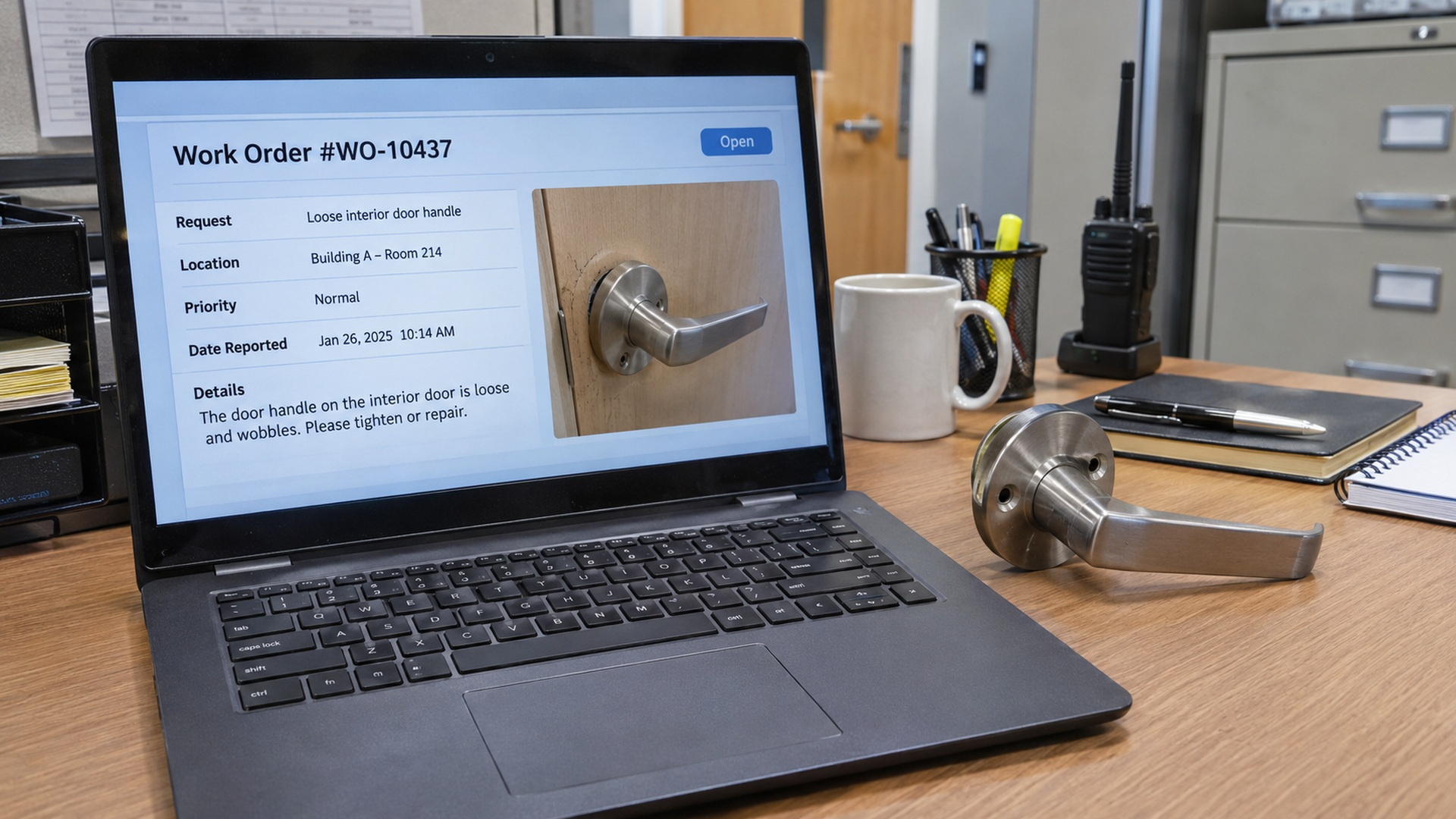
Every request should identify a location, the person reporting it, the date and a description of the observed condition. Add a photograph where it is safe and useful. A report that says “the door at the western meeting room catches near the bottom” gives the next person more context than “door broken”.
Separate the symptom from the diagnosis. An occupant can describe a sound, a visible mark or an interruption to use without being expected to determine its cause. A maintenance provider can then record what was inspected, what was found and what remains uncertain. This distinction matters when the issue has several possible explanations.
Give the request an owner and a next action. An open ticket without responsibility can become a forgotten entry. A useful status is specific: awaiting access, inspection booked, quotation requested, awaiting approval or completed with follow-up required. A general label such as “in progress” is less helpful if it remains unchanged for weeks.
Agree how urgent matters are reported. A digital form is not a substitute for an emergency process. An active safety hazard should be escalated immediately through the building's established channels, and people should be kept away from the affected area.
An asset register provides context
An asset register is a structured list of the building elements the organisation has chosen to track. Depending on the property, it might include major mechanical equipment, access-control components, lighting groups, doors or other maintainable assets. A small office does not need to record every screw to benefit from the principle.
Choose a consistent identifier and location for each item. Record the information that is known, such as installation date, manufacturer, model, maintenance history and documents. If information is missing, mark it as unknown rather than guessing. A professional can help verify the details during an appropriate visit.
The register should reflect operational importance as well as equipment type. A door used for a critical access route or a component serving a busy customer area may need a different response from an equivalent item in a rarely used room. The distinction helps prioritise maintenance after safety issues have been addressed.
Keep the register current when equipment is replaced or space is remodelled. A record of a component that was removed two years ago can mislead the next contractor. Assign responsibility for updates and make that task part of the handover process rather than an optional administrative step.
Photographs can show change over time
A photograph is most useful when it has a date, a location and enough context to identify what is being shown. Pair a wider view with a detail where appropriate. A close-up of a damaged fitting may be clear today but difficult to locate after staff change.
Repeat photographs can help show whether a visible condition has changed, but they do not prove the hidden cause or the quality of a repair. A crack, stain or surface defect may need a professional assessment. The record should avoid presenting an unverified interpretation as a fact.
Respect privacy when photographing occupied spaces. Avoid capturing people, confidential screens, personal information or security details unnecessarily. Store images in an access-controlled location and provide contractors only the information needed for the work.
For a planned repair, retain a record of the reported condition, the agreed scope and the completed work. The purpose is to make the history understandable, not to manufacture a before-and-after story about a project. If work remains incomplete or an issue cannot yet be assessed, record that limitation.
Turning repeated tickets into a pattern
A single request may be an isolated event. Several similar requests can suggest a pattern worth investigating. Are the same doors reported as sticking after heavy use? Are complaints concentrated in one part of the building? Does the problem return soon after the same type of repair?
The record should help ask those questions without jumping to a conclusion. A recurring issue can have several causes, including different faults that look similar. Timing and location are clues, not proof. A competent provider should inspect the relevant condition and explain the basis for a recommendation.
When a pattern appears, consider whether the scope should shift from repeated individual call-outs to a broader assessment. A group of identical fittings may justify a review of compatibility, use and condition. The result may still be a small repair, but the decision is made with a better view of the history.
Track the outcome after work is complete. If the original problem returns, record when it reappeared and whether conditions were the same. That information helps the provider assess the next step. It does not automatically establish that an earlier repair was defective or that a replacement is needed.
Planned work and reactive work need different workflows
Some maintenance can be scheduled around a known condition or the manufacturer's guidance. Other work begins with an unexpected failure. A useful system should accommodate both rather than forcing every issue into the same calendar.
For planned tasks, record the recommended activity, the source of the recommendation, the person responsible and the next review date. The interval should suit the equipment, usage and professional advice. A generic schedule copied from another property may be inappropriate for a building with different occupancy or exposure.
For reactive requests, record the impact and urgency as well as the location. An entrance door that cannot close, a loose fitting in a public area and a cosmetic defect have different consequences. The person triaging the request should know which matters require immediate escalation and which can be grouped into a planned visit.
A completed planned task can create a new reactive action. For example, an inspection may identify a damaged component requiring a separate quote. Link the finding to the follow-up so it is not lost when the inspection ticket is closed.
Technology does not replace an inspection
Sensors, digital meters and remote monitoring can provide useful information about equipment or building conditions. Their value depends on what is measured, where the device is installed, the quality of the data and the response process. A sensor that produces alerts no one reviews may add cost without improving decisions.
Before buying a monitoring system, define the problem. Is the organisation trying to understand when equipment is used, identify an interruption quickly or compare readings over time? Ask what a normal reading looks like, who will receive an alert and what action they are expected to take. Consider ongoing costs, connectivity, maintenance and access to the data if the service ends.
Monitoring has limits. A device may not detect a fault outside its measurement range, and an unusual reading can have more than one explanation. The result should prompt an appropriate investigation, not be treated as a complete diagnosis or a certificate of safety.
Likewise, a photograph from a phone or a dashboard can support a conversation but cannot establish the condition of hidden materials or prove that regulated work complies with applicable requirements. Engage the appropriate qualified professional for assessment and work within their field.
Give contractors useful context
A contractor can work more efficiently when the request includes an accurate location, access arrangements and the history relevant to the fault. Share the original symptom, previous work and any known constraints. Identify whether the area is occupied, whether an escort is needed and who can approve a change in scope.
Do not overwhelm the provider with an unrelated archive. A concise job record and access to relevant documents are more useful than hundreds of unlabelled photographs. If a previous diagnosis was uncertain, say so. A new contractor should not be expected to treat an old assumption as a confirmed fact.
Ask for a written description of findings and work completed at a level appropriate to the job. Record the parts used where relevant, any limitations and recommended follow-up. If the work reveals a need for a specialist, identify who will arrange that assessment and whether the area can remain in use in the meantime.
Agree how changes are approved. An occupied commercial building may have separate roles for reporting, authorising expenditure and granting access. A contractor should know whom to contact when a concealed condition makes the original quote unsuitable.
Measure outcomes that matter
A dashboard can show the number of open requests, but a number alone may hide important differences. Ten cosmetic issues are not equivalent to one unresolved safety concern. Useful reporting considers priority, age, operational impact and whether the next action is clear.
Possible measures include the time taken to acknowledge a request, the proportion with a named owner and the number of recurring issues in the same location. Define each measure consistently and interpret it alongside the actual work. A fast closure is not a good outcome if the underlying issue was not assessed or the record was closed prematurely.
Review trends at a practical interval. A small property may benefit from a monthly review; a more complex site may need a different rhythm. The purpose is to decide what to do next: group routine work, investigate a recurrence, update a budget or improve the way requests are submitted.
Avoid using a metric to blame occupants for reporting defects. A good reporting culture makes it easy to raise concerns early and gives people feedback about what will happen. That feedback can be brief, but it should be reliable.
Protect records and maintain access
Building records can contain sensitive information about access, equipment and occupants. Use permissions appropriate to the information and the people who need it. Keep personal details to what is necessary for the maintenance process, and avoid sharing credentials or security-sensitive drawings in an open group.
Consider continuity when choosing a platform. Who controls the account? Can records be exported? What happens if the person who administers the system leaves? A simple, well-maintained folder with a backup may be more sustainable than a complex system owned by one individual.
Set a review process for outdated or duplicate records. When a component is replaced, retain the relevant historical information but make it clear which equipment is current. Keep warranties and product instructions with the correct item. A maintenance record should help the next person understand the building, not require them to reconstruct it from scattered messages.
Introduce improvements in manageable stages
Start with one building or a limited group of assets. Agree on the fields that matter and test whether occupants and contractors can use the process. Review the information after a few cycles and adjust the form before expanding it across a portfolio.
Training can be brief and practical: how to describe a symptom, how to choose the location, when to use the emergency contact and where to find updates. Provide an alternative route for people who cannot access the system. A digital tool should make reporting easier, not prevent a concern from being raised.
Once the basic process is reliable, consider whether additional features such as automatic reminders or monitoring would solve a specific problem. Evaluate cost, maintenance effort and the quality of the information. Technology is worthwhile when it supports a decision the organisation is prepared to act on.
Better records, better conversations
The most useful maintenance technology gives owners, occupants and contractors a shared picture of what happened and what needs attention next. It supports prioritisation, makes recurring problems easier to investigate and provides a clearer basis for approving work.
Commercial Construction provides maintenance and repair services. Share the property location, the affected areas and the available maintenance history to discuss an assessment and a practical scope.